Queen Alexandrine’s sapphire piece
When Duchess Alexandrine married Prince Christian, the later Christian X, in 1898, she received a precious sapphire piece as a wedding gift.

In 2024, over 125 years later, it was acquired by the Royal Danish Collection.
With this acquisition, the museum preserved an important chapter in the story of the Royal House of Denmark and ensured the continuation of the tradition associated with this jewellery piece.
This tradition of continual adaptations and modifications has now been revived in collaboration with HM The Queen. This brings Queen Alexandrine’s sapphire piece safely into the 21st century as a unique piece of jewellery and a long-standing tradition. As a result, Queen Alexandrine’s sapphire piece can now again be worn by a Danish queen, more than 80 years after its making.

A renewed life
In collaboration with the Royal Danish Collection, the jewellery designers arrived at a solution that revitalises the piece while preserving its history.
Revitalising a jewellery piece and a tradition
The Royal Danish Collection’s acquisition of the sapphire piece, in 2024, provided a rare opportunity to continue the royal tradition of adapting historical jewellery to contemporary use without compromising the history of the piece.
An important aspect in continuing this particular tradition has been to ensure that all modifications are fully reversible. The historical settings of the piece have been preserved, while new mountings enable a wider range of uses.
Prior to this transformation process, the Royal Danish Collection documented the complex history of the piece. Based on this research, and in close collaboration with HM The Queen, the Royal Danish Collection commissioned the jewellery designers Diana Holstein and Hanan Emquies of Emquies-Holstein to create a proposal for redesigning the piece for the 21st century with respect for history.
A piece of jewellery that can be worn in four different ways
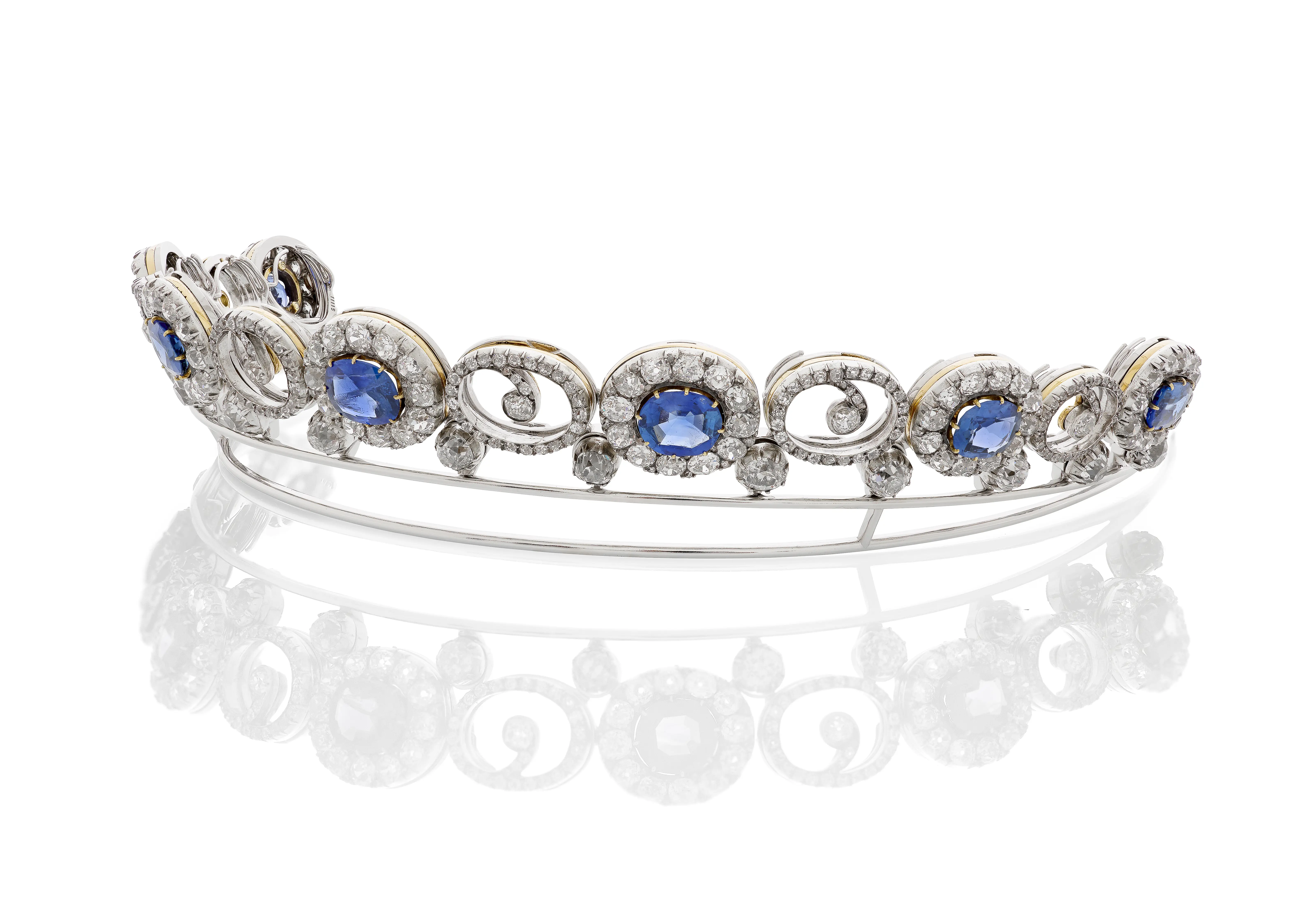
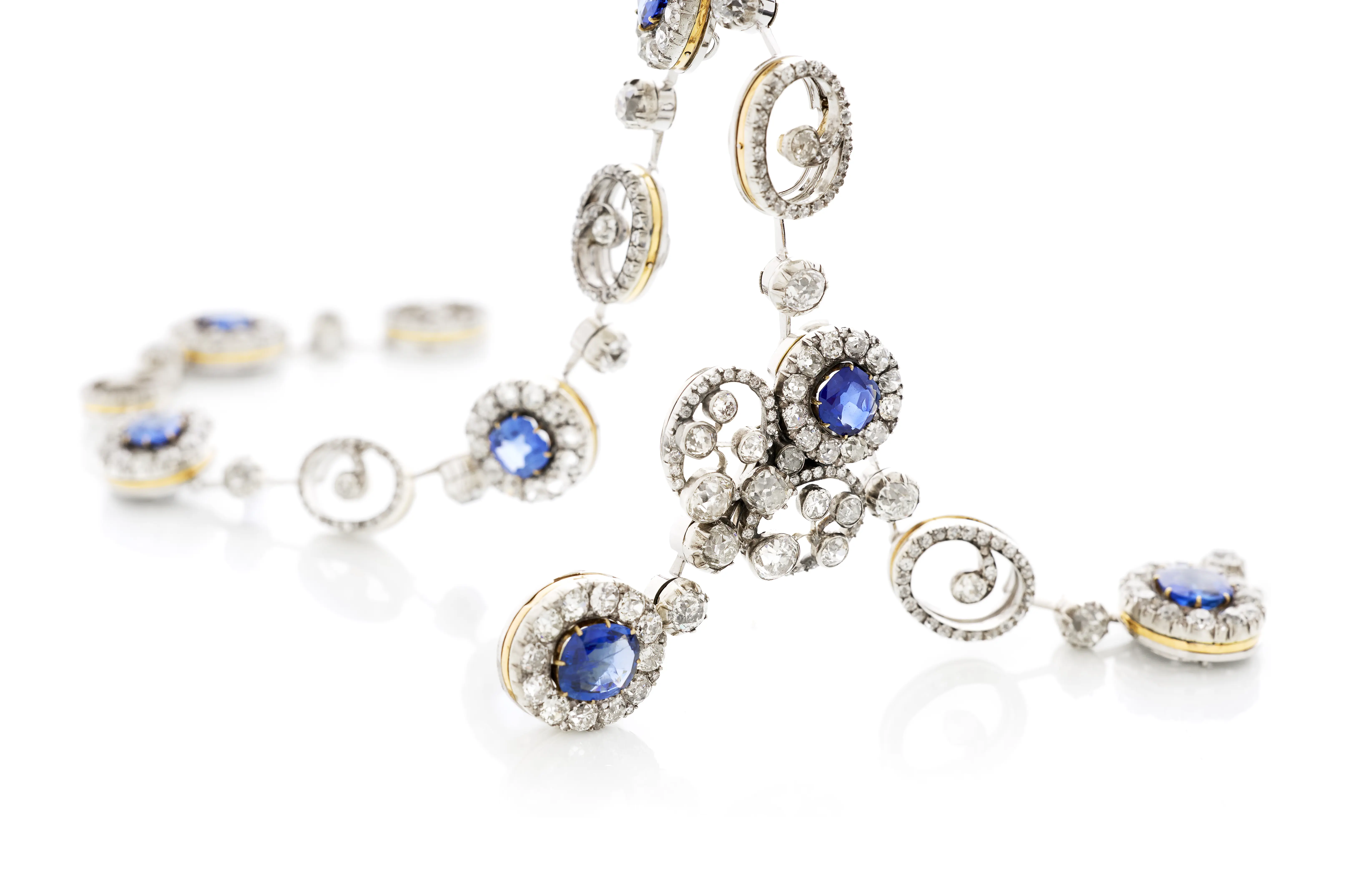
As a tiara
With inspiration from the low bandeau tiara worn by Princes Caroline-Mathilde, Heiress Presumptive.
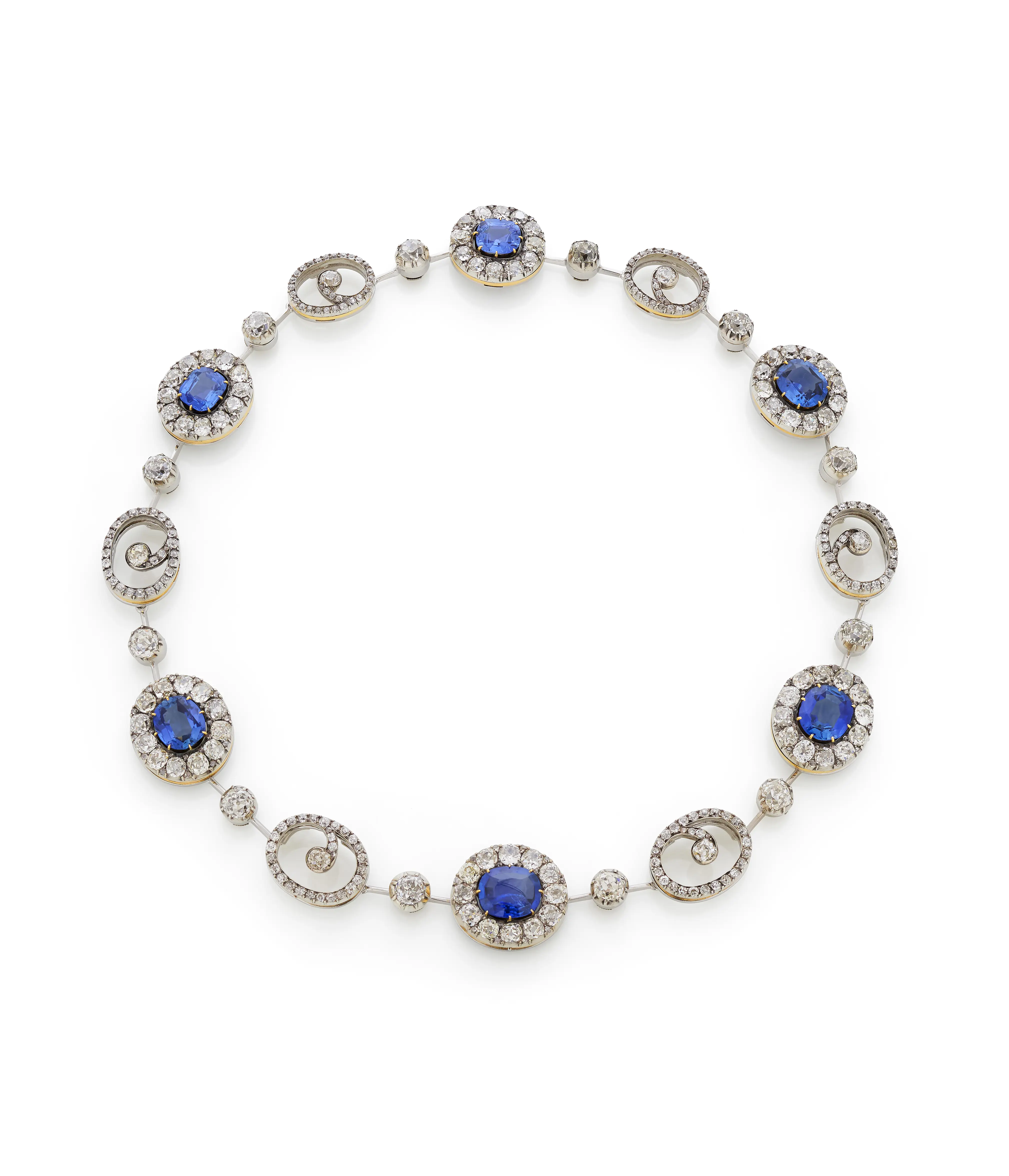
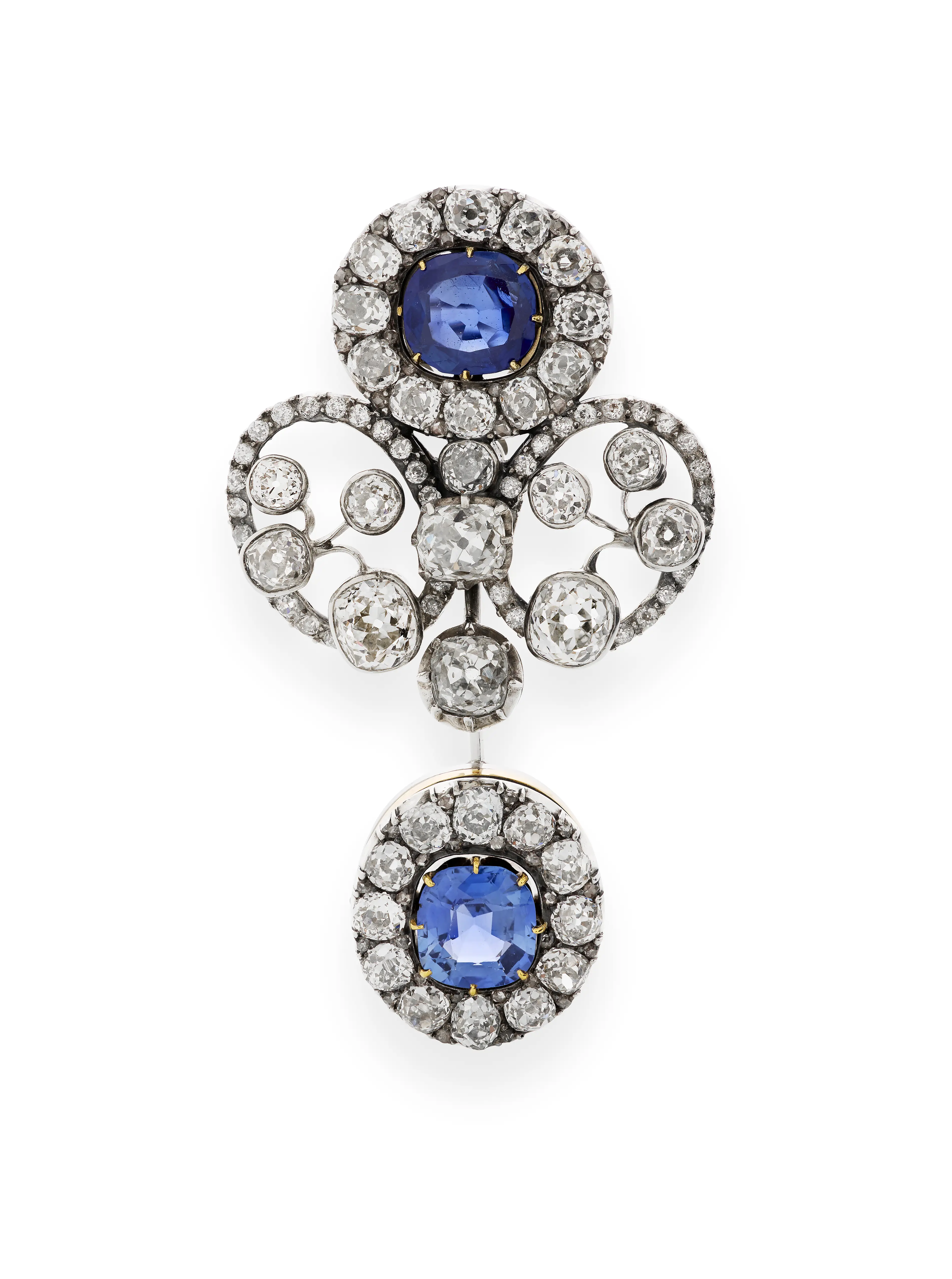
As a large collar
With or without the tiara’s top element as a centrepiece.
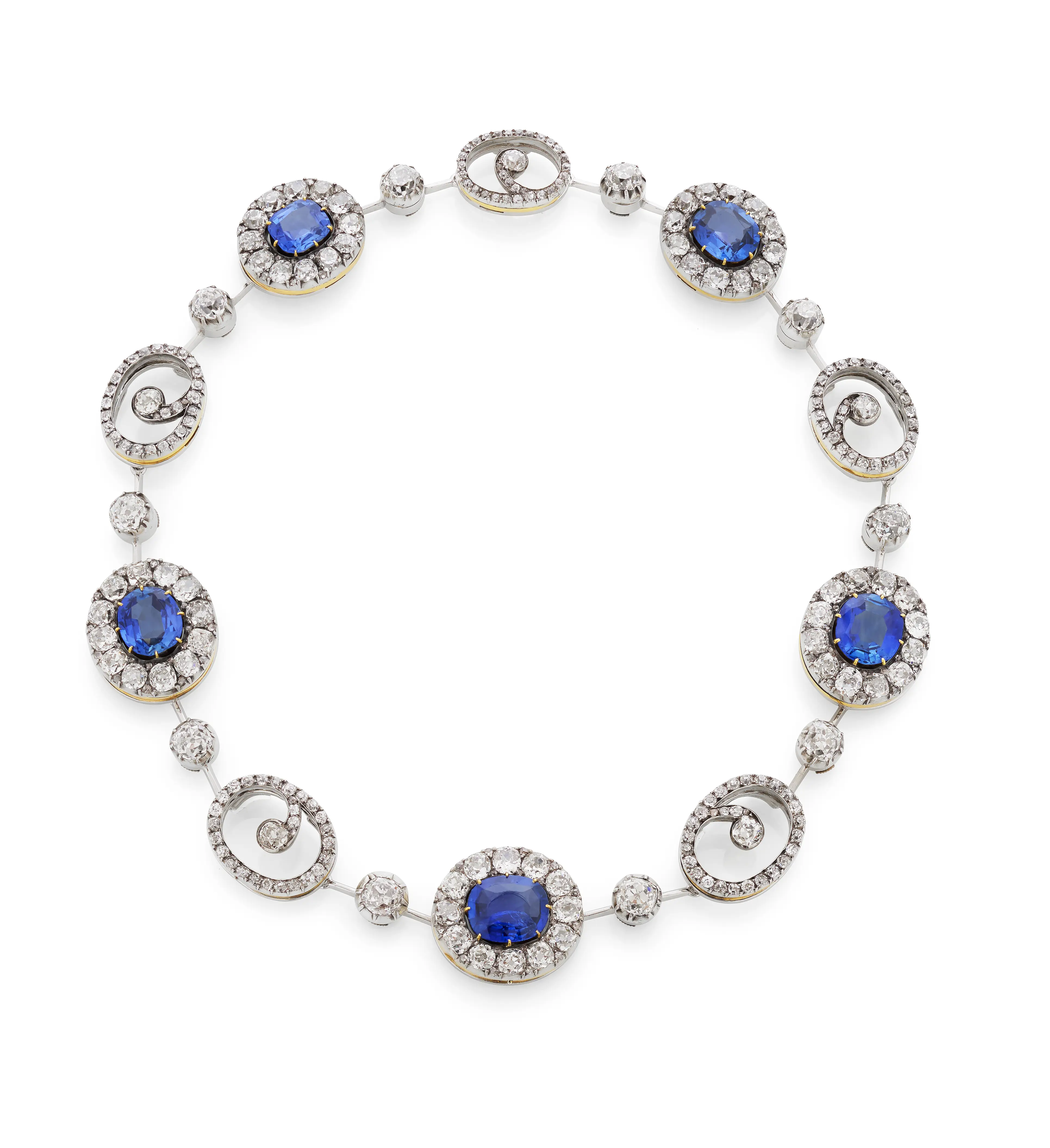
As a short necklace
With or without the top element.
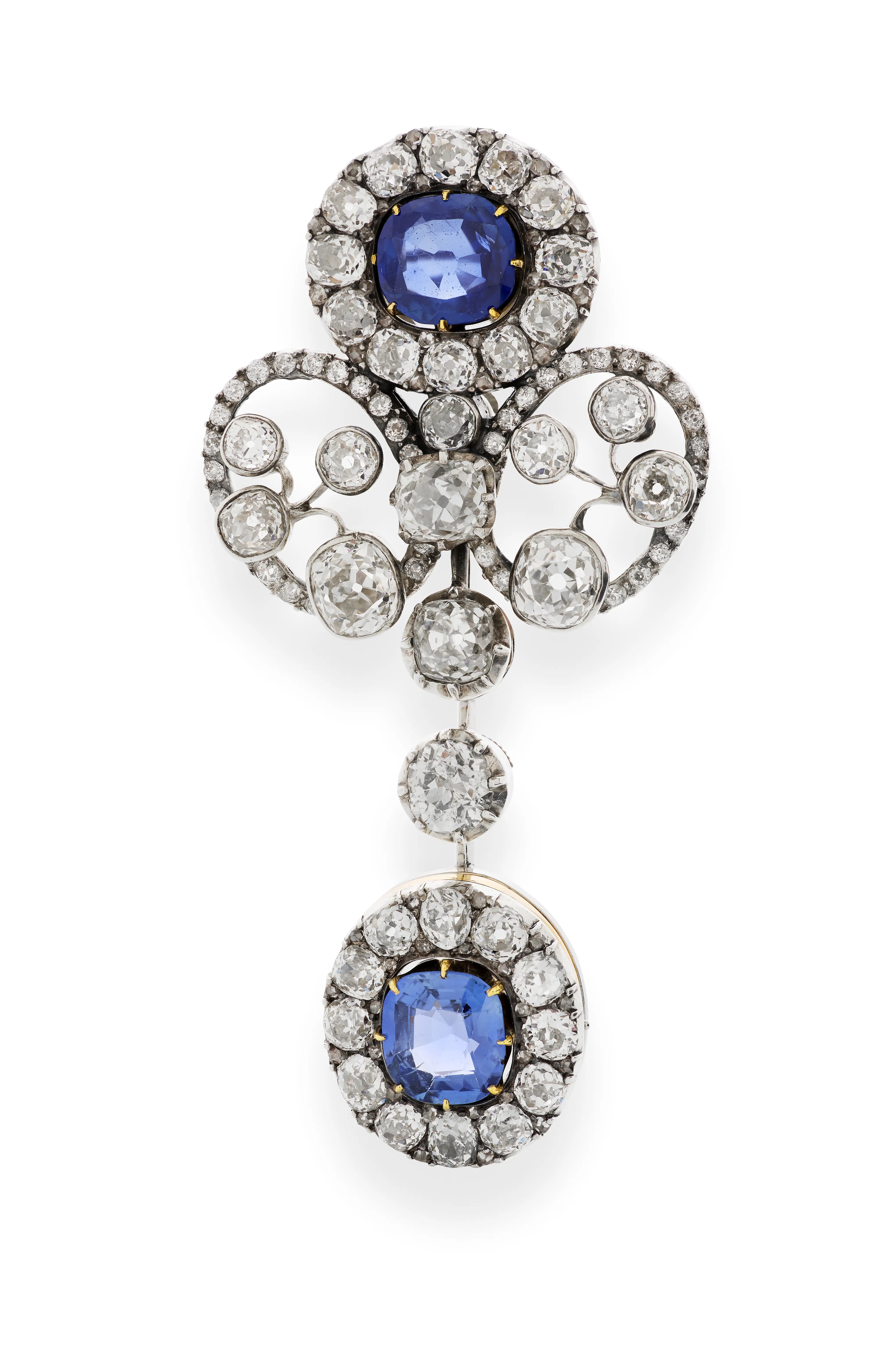
As a brooch
With or without a pendant sapphire element.
Large collar in different versions
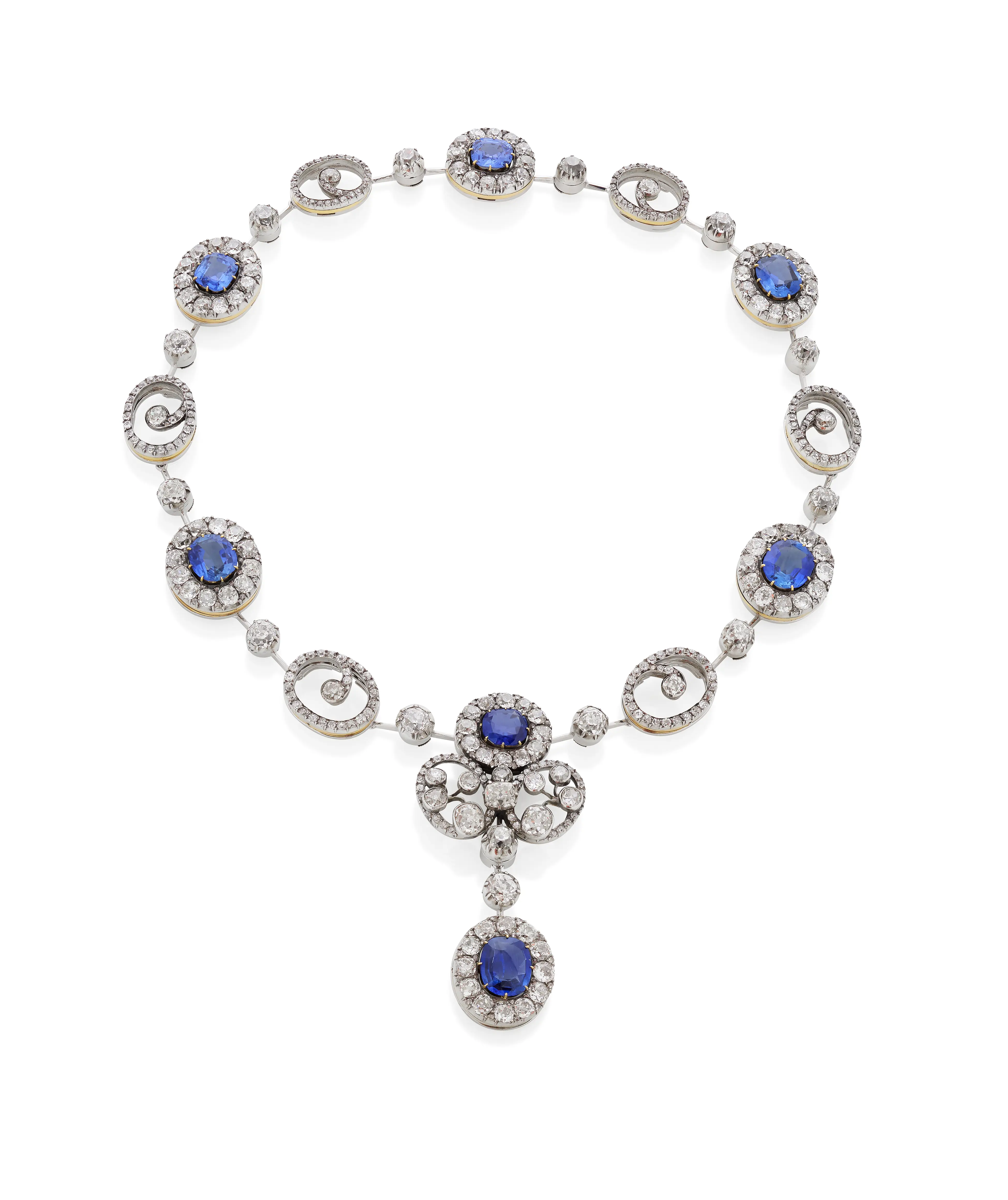
1
With the top element, with a long pendant.
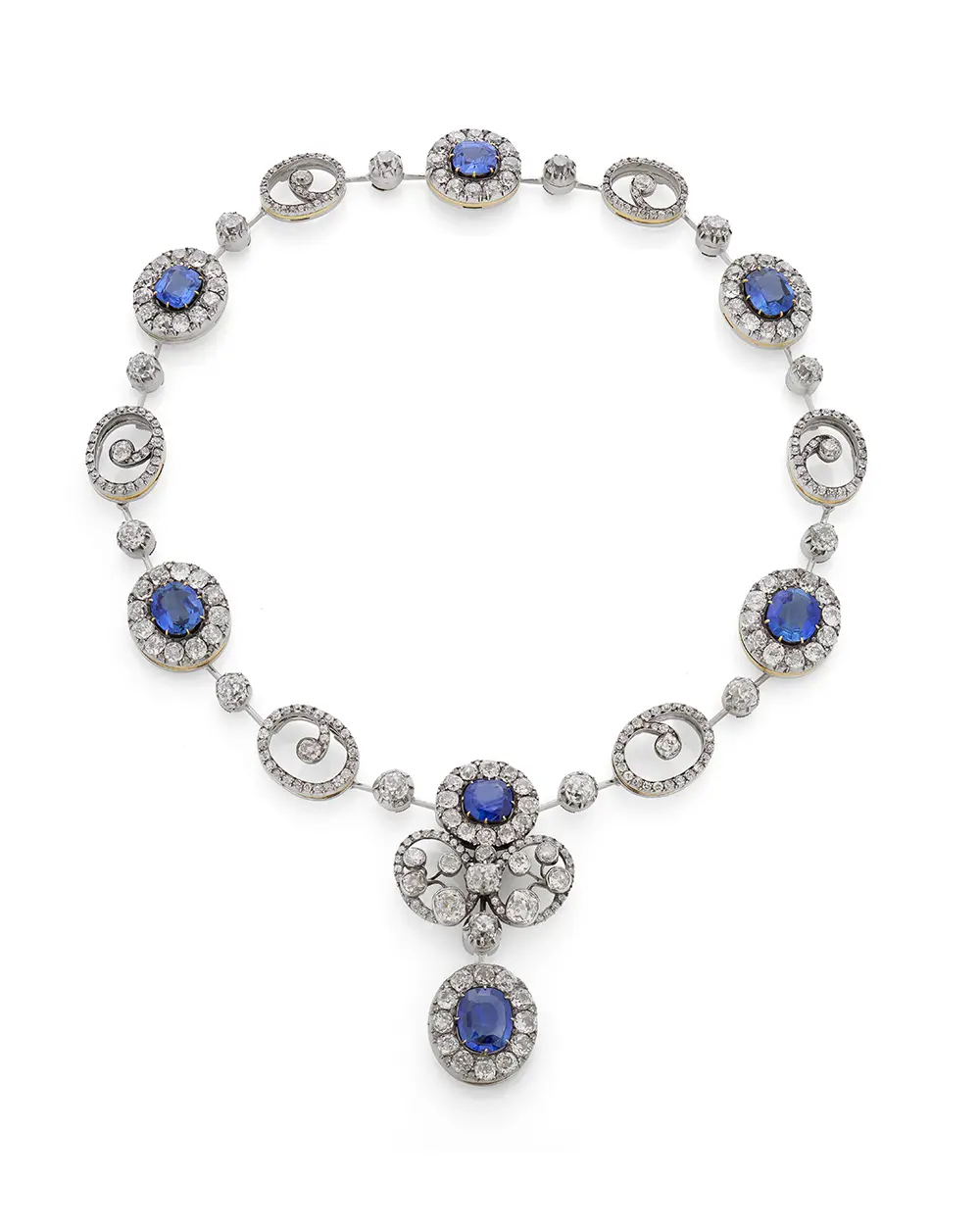
2
With the top element, with a short pendant.
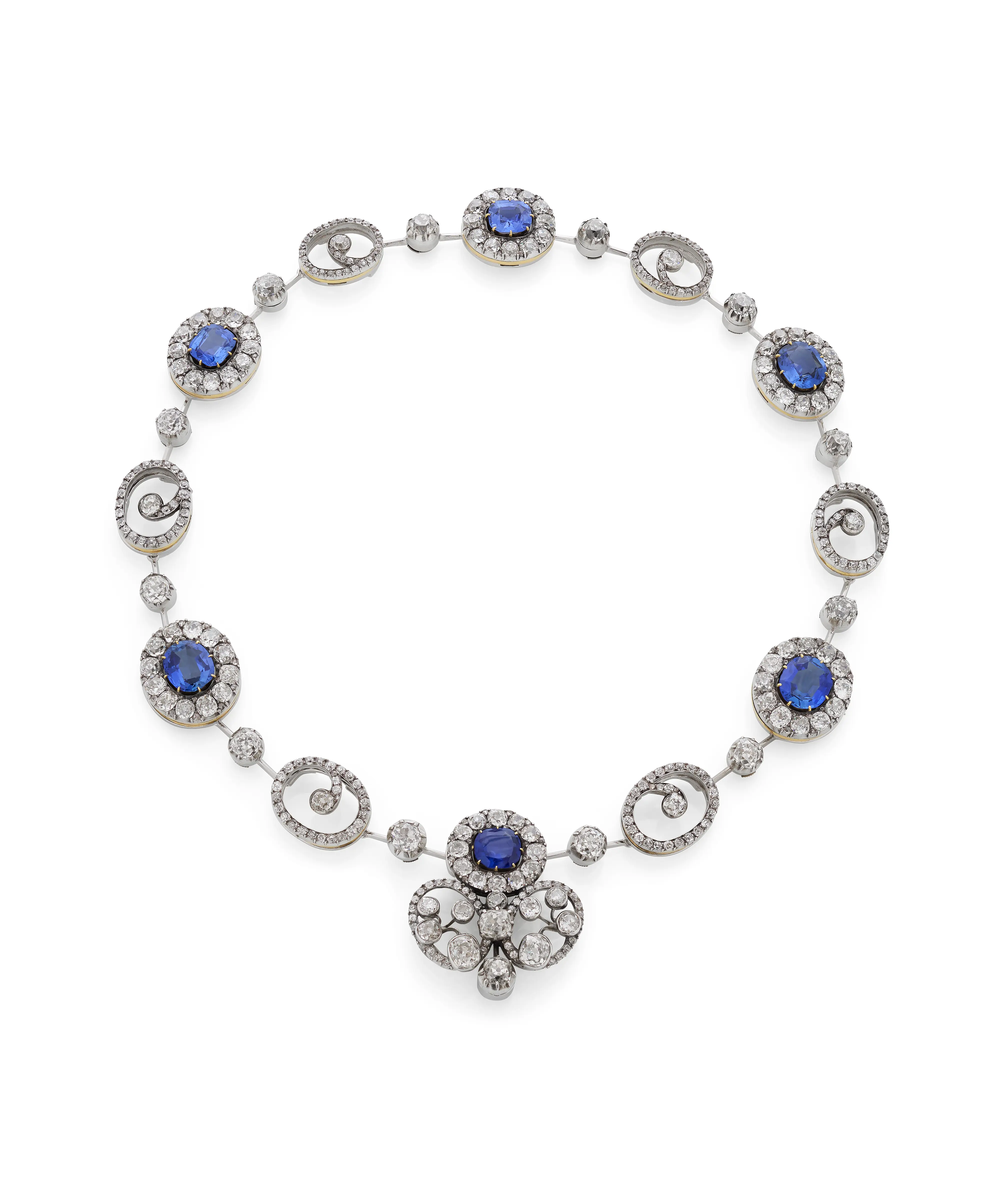
3
With the top element, with a pendant.
4
Without the top element as a centrepiece.
Three generations of royal women
Since the later Queen Alexandrine received it in 1898, the sapphire piece has been worn by three generations and repeatedly redesigned and adapted to varying styles and needs.
From its creation until 2024, the sapphire piece has been associated with
- Queen Alexandrine (1898–1933)
- Princess Caroline-Mathilde, Heiress Presumptive (1933–1995)
- Countess Anne Dorte of Rosenborg (1997–2014)
Over the course of these three generations, the piece has been adapted to varying fashions and uses, while the characteristic sapphires and garlands have been preserved.
Queen Alexandrine’s wedding gift
The history of the sapphire piece begins in April 1898. The newly married Princess Alexandrine of Danmark, born Duchess of Mecklenburg-Schwerin, received a precious sapphire collar as a wedding gift from the Russian Imperial Couple, Nicholas II and Alexandra Feodorovna.
The piece is believed to have consisted of eight oval sapphires encircled by diamonds and eight diamond-studded garlands with centred drops. It was probably made by the Swedish-Russian jewellery firm Bolin.
Unfortunately, we have very few descriptions and no known pictures of the original piece. In connection with a story about the wedding, a newspaper simply described it as ‘a collar with diamonds and sapphires’.
A wedding gift for Princess Caroline-Mathilde, Heiress Presumptive
In 1933, Queen Alexandrine gave the sapphire piece as a wedding gift to the wife of her youngest son, Prince Knud, Princess Caroline-Mathilde, later Heiress Presumptive.
Before it was passed on as a gift, the sapphire piece was redesigned as a modular piece with new mountings and uses to match the current fashion. Among other changes, it could now also be worn as a tiara.
The tiara was designed as a so-called bandeau, a stylised headband worn across the forehead, a popular style during the 1930s.
A new top element was created from two diamond-studded garlands and an oval sapphire element. This top element was the centrepiece of the bandeau given to Princess Caroline-Mathilde, Heiress Presumptive.
We do not know who the jeweller was who carried out the redesign, but in a newspaper story about the wedding in 1933, the piece is described as ‘an old brilliant-cut diamond piece [...]. It can be worn either as a tiara or as a collar’.
A new tiara for a new time
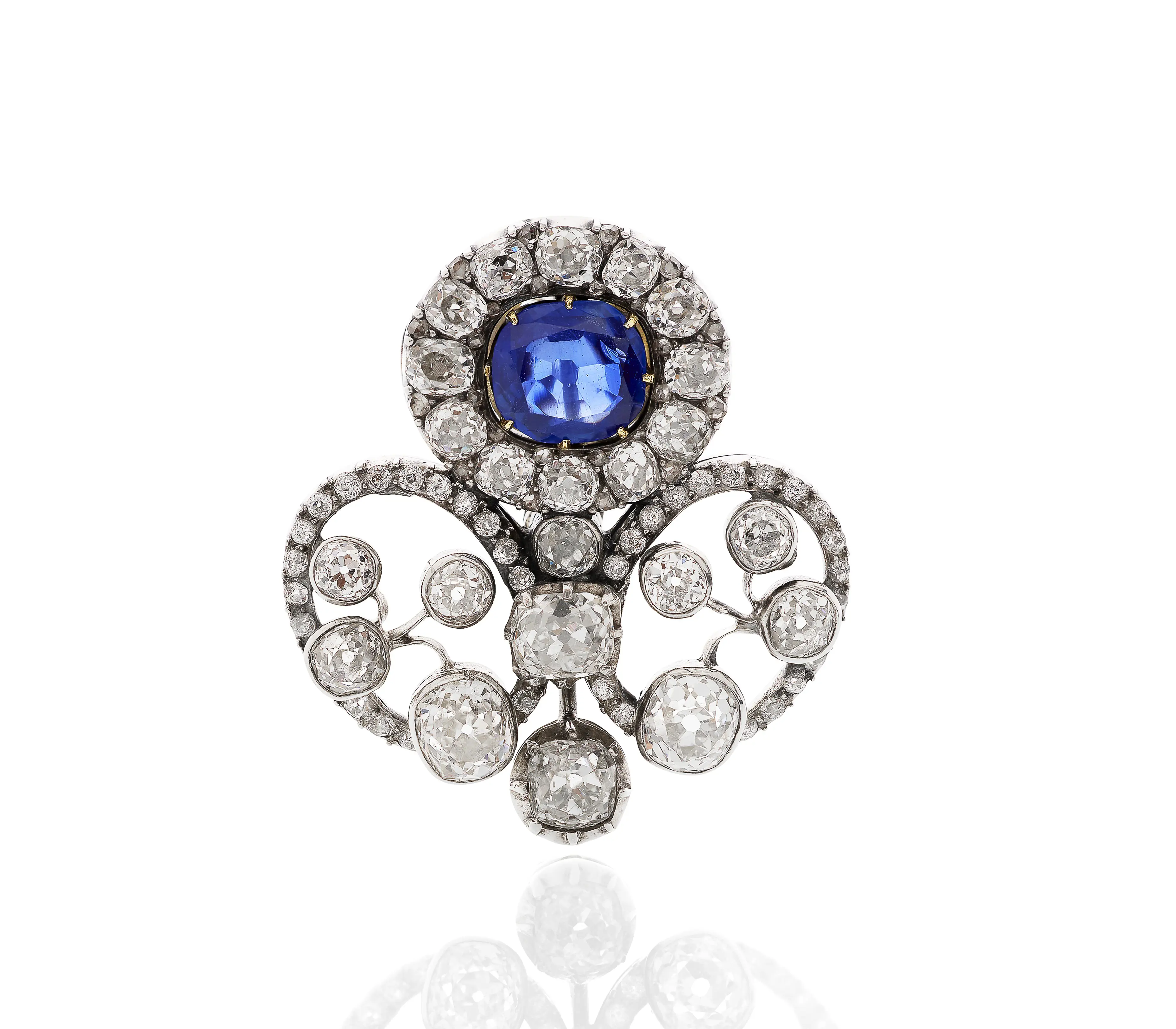
During the decades after the Second World War, the fashion changed. Tiaras were now worn atop the head, rather than across the forehead. Around 1960, Princess Caroline-Mathilde, Heiress Presumptive, therefore had the sapphire piece altered again.
This time, the transformation was handled by Court Jeweller Michelsen, who created a new frame that gave the tiara a taller, more compact shape. The individual elements were preserved but mounted in a new formation.
After this transformation, the sapphire was only worn as a tiara, without the earlier option of being worn as a collar.
In 1963, Princess Caroline-Mathilde, Heiress Presumptive, wrote about the piece, ‘This tiara belongs to Prince Christian. The Russian sapphire tiara.’
Later, the piece was given as a gift to Countess Anne Dorte of Rosenborg, the daughter-in-law of Princess Caroline-Mathilde, Heiress Presumptive. The Countess also wore it as a tiara on several occasions.
In 2018, four years after the death of Countess Anne Dorte, the piece was sold to a private collector. In 2024, the Royal Danish Collection was able to acquire it with the purpose of securing the historic piece as part of a museum collection and to make it available for use by the Royal House of Denmark.
A tradition continues
The acquisition of the sapphire tiara in 2024 made it possible to resume the 125-year-long tradition of adapting the sapphire piece to new time sand changing tastes.
The purpose of this latest transformation has been to continue this tradition with respect for history while also bringing Queen Alexandrine’s sapphire piece into the 21st century.
When the sapphire piece is not worn by HM The Queen, it will be on display to the public at the Amalienborg Museum.
Watch the film series about the creation of the new sapphire piece
FAQ: frequently asked questions